- /
- ASP Summit
- /
- Circular economy in Medical Devices...
- /
- The role of Medical Device...



During the second webinar, Dr. Eng. Jeremy Faludi will address the Medical device industry values safety, as it should. Throwing away entire products just to avoid cleaning them creates air pollution, water pollution, and other waste that damages people’s health.
Don’t just treat the patient in the room, treat the other 8 billion patients in the world as well.

UK NHS found most of its CO2 footprint is in its supply chain. Even full remanufacturing of medical devices can cut CO2 in half, and mere sterilization is even better. Estimation for a single “smart syringe” would save 100K tons of CO2 / yr + over 200 tons of rock mining & waste/yr.

You will find barriers like reverse logistics (getting products back); safety (sterilization), and regulations on material handling (easier to throw away). Ask for product-service systems, to save you the hassle. The manufacturer handles recovery, sterilization, remanufacture, etc. You don’t have to.

There are specific tools & methods for implementing the circular economy in design, engineering, & business. Don’t just think green thoughts in normal product development.

All hospitals have purchasing departments, and many hospitals have technology assessment depts.; the assessors should learn life cycle assessment (LCA) or circularity metrics. Not necessarily to do your own LCAs, but to require them of suppliers. Make purchasing decisions based on them and avoid greenwashing.
This is the second webinar dedicated to “The role of Medical Device Reprocessing in Circular Economy – Opportunities and pitfalls”, presented by ASP Continuous Education.
23rd of June 2022
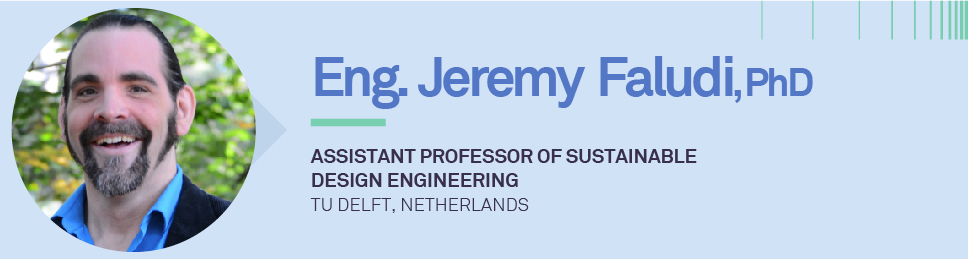
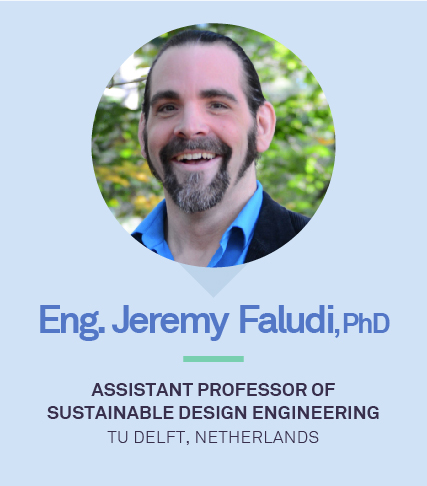
- Degrees in physics (BA), design (MA), and mechanical engineering (PhD)
- Sustainable product design
- Sustainability assessments (LCA, toxicity, repairability)
- Created whole system mapping design method
- Wrote OECD’s guidelines for sustainable 3D printing
- Curriculum taught at roughly 100 universities worldwide
MESSAGES
- A circular economy is more than just recycling. Before that, we need to reduce consumption, repair, reuse, refurbish, and remanufacture, to save both environmental impacts and money.
- Barriers to circular economy medical devices are real, but they can be overcome. We need to overcome them because healthy people require a healthy world.
- Current economics drives manufacturers toward planned obsolescence, but they must switch business models and design methods to drive the circular economy.
- Purchasers have leverage, both in buying more sustainable products based on LCA or other quantified impact assessments and subscribing to new business models like product-service systems. If companies don’t offer them, push them to provide the data and/or the business models.

Continuous educational credits
How to Earn Your CE Credits
During the process you will be redirected to Learning Management System (LMS) platform to complete your learning journey, which includes viewing the webinar and reviewing the factsheet.
Upon completion, you will receive your CE credit certificate.
How to navigate on LMS
We’ve improved the overall experience for our E-modules making them more engaging, easy to use and user-friendly. Watch the video.
 Webinar
Credits